
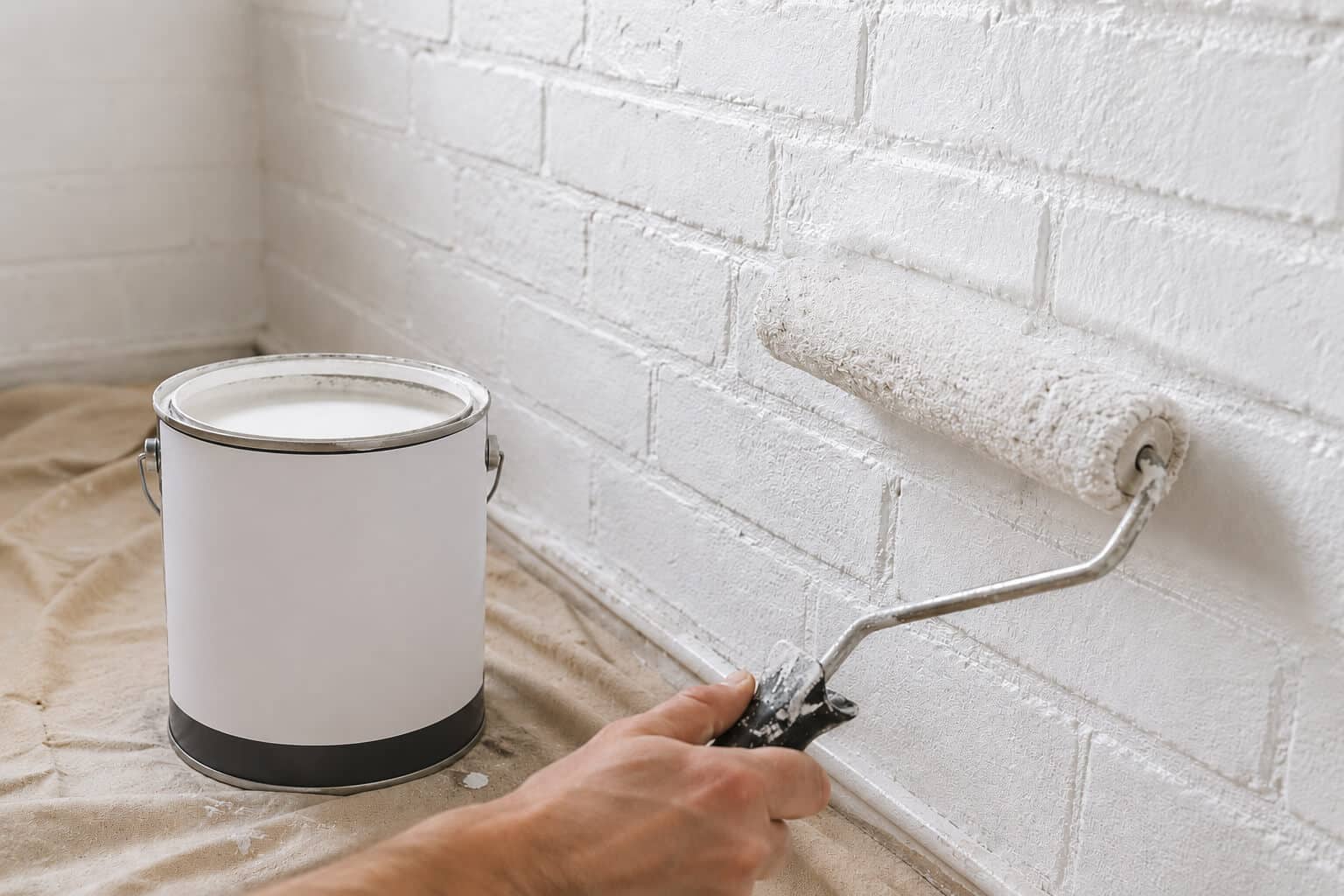
27 May Can You Use Masonry Paint Indoors? Get the Right Finish for Your Home
If you are planning a decorating project, you may have wondered: Can you use masonry paint indoors?
Technically, yes – masonry paint indoors is possible in certain situations. However, generally speaking, masonry paint is designed for exterior surfaces rather than interior walls, and using exterior paint indoors is not always the best option for your home or living space.
While some homeowners use masonry paint for feature walls, concrete surfaces or industrial-style interiors, there are important differences between interior paints and exterior paint that should be understood before you start painting.
In this guide, we explain the difference between masonry paint and interior paint, the potential health risks of using exterior paint inside, and when masonry paint may or may not be suitable indoors.
What Is Masonry Paint?
Masonry paint is a specialist exterior paint designed to protect outdoor surfaces such as:
- Brick
- Concrete
- Pebble dash
- Render
- Stone
- Exterior walls
Most masonry paints are formulated to withstand harsh weather conditions, including rain, UV rays, moisture and temperature changes.
Unlike standard interior paints, masonry paint contains additives that help create a highly durable and water-resistant protective barrier across outdoor surfaces.
This makes it ideal for protecting buildings from:
- Water ingress
- Mould and mildew
- Cracking
- Peeling
- Weather damage
- Damp penetration
Because exterior wall coatings and masonry paints are built for outdoor use, they are often much tougher than paints designed purely for interior surfaces.
Can You Use Masonry Paint Indoors?
The simple answer is yes, you can use masonry paint indoors – but it is not typically recommended for most interior walls.
Exterior paint indoors can sometimes cause issues because it is formulated very differently from interior paints.
While masonry paint offers excellent durability and weather resistance outdoors, indoor environments require paints that are breathable, low odour and safer for indoor air quality.
Using exterior paint inside may lead to:
- Strong lingering fumes
- Poor adhesion on internal walls
- Trapped moisture
- Unsatisfactory paint finish
- Peeling over time
- Reduced breathability
Exterior paints are specifically formulated to endure harsh outdoor conditions, while interior paints are designed for easier cleaning, everyday durability and safer indoor use.
Why Exterior Paint Is Different from Interior Paint
The main difference between exterior paint and interior paints comes down to the resins, additives and chemicals used within the formula.
Exterior paints are designed to:
- Resist moisture
- Withstand UV rays
- Handle rain and temperature changes
- Expand and contract outdoors
- Protect against harsh weather conditions
Interior paints, on the other hand, are formulated to provide:
- Better indoor air quality
- Easier cleaning
- Lower VOC levels
- Comfortable finishes
- Better stain resistance
- Improved durability against furniture scuffs and everyday wear
Interior paints such as durable matt, silk emulsion and vinyl paints are generally far better suited for internal walls because they allow moisture movement while maintaining a smooth and comfortable finish.
The VOC Issue with Masonry Paint Indoors
One of the biggest concerns when using masonry paint indoors is the level of volatile organic compounds, commonly known as VOCs.
Exterior paints often contain higher levels of volatile organic compounds because they are designed for outdoor exposure where ventilation is naturally better.
When used indoors, these harmful chemicals can negatively affect indoor air quality and may lead to:
- Headaches
- Dizziness
- Respiratory discomfort
- Lingering strong fumes
In poorly ventilated spaces, these potential health risks become even more concerning.
This is why proper ventilation is absolutely essential if you decide to paint indoors using any type of exterior paint.
Is Water-Based Masonry Paint Safer Indoors?
If masonry paint must be used indoors, water-based paints are generally a safer choice than oil-based paint.
Water-based acrylic paint formulas typically produce fewer fumes and are less likely to release harmful chemicals into the air compared to solvent-heavy exterior coatings.
Using water-based masonry paint indoors may therefore be more suitable for:
- Utility rooms
- Basements
- Garages
- Outbuildings
- Certain industrial-style interiors
However, even water-based masonry paint is still designed primarily for outdoor use rather than interior living spaces.
When Might Masonry Paint Work Indoors?
Although not ideal for most rooms, there are some situations where masonry paint indoors can work well.
For example, masonry paint is sometimes used on:
- Bare brick feature walls
- Concrete walls
- Basement spaces
- Utility areas
- Industrial-inspired interiors
The flat texture and raw appearance can create a striking industrial finish that some homeowners prefer.
Moisture-resistant masonry paints may also be practical in damp-prone spaces such as unheated outbuildings or basements where standard interior paints may struggle.
If you decide to use masonry paint indoors, applying a stabilising primer beforehand can help improve adhesion and overall durability.
Why Masonry Paint Is Not Ideal for Most Interior Walls
While durable, masonry paint is not usually the best solution for standard interior walls and ceilings.
One reason is texture. Masonry paint often has a rougher finish that can trap dirt and become difficult to clean over time.
Another issue is breathability. Older homes with plaster walls particularly need breathable paint systems that allow moisture to move naturally through the walls.
Using exterior paint indoors can sometimes trap moisture within internal walls, potentially causing damp problems and peeling paint later on.
Masonry paint also tends to have a flatter finish that absorbs light rather than reflects it, making some indoor spaces feel darker and more enclosed.
Better Alternatives to Masonry Paint Indoors
For most interior decorating projects, dedicated interior paints are the better choice.
Depending on the room and surface, suitable options may include:
- Durable matt emulsion
- Silk emulsion
- Acrylic paint
- Bathroom paint
- Washable interior paints
- Moisture-resistant coatings
Bathroom paint, for example, is specifically designed to resist moisture and mildew without sealing walls too tightly.
High-quality interior paints are also easier to clean and maintain, offering better resistance to everyday stains, marks and wear compared to most masonry paints.
How to Paint Indoors Properly
Whether using interior or exterior products, preparation is key to achieving a professional finish.
Before applying paint:
- Move or cover furniture
- Clean the painted surface thoroughly
- Repair cracks or damage
- Use proper ventilation
- Apply the correct primer if needed
If using masonry paint indoors, ensure proper ventilation throughout the project and allow extra drying time between coats.
Using a paint roller designed for textured surfaces can also help achieve more even coverage on porous masonry materials.
So, Should You Use Masonry Paint Indoors?
Yes, but in most cases, it is not the ideal solution for interior walls or living spaces.
Masonry paint is specifically formulated for exterior surfaces and harsh outdoor conditions. While it offers excellent durability, weather resistance and protection outdoors, it may create issues indoors due to stronger fumes, trapped moisture and reduced breathability.
For most homes, dedicated interior paints remain the best option because they are designed to provide better indoor air quality, easier maintenance and a more suitable finish for internal walls.
However, for certain industrial-style interiors, bare brick features or damp-prone utility areas, water-based masonry paint can sometimes work well when applied correctly with proper ventilation and preparation.
At PEBS, we help homeowners choose the right paint systems for every interior and exterior painting project, ensuring long-lasting finishes that balance durability, appearance and performance.
Disclaimer: While masonry paint can be used indoors in certain situations, it is primarily designed for exterior use. Always check manufacturer guidance, ensure proper ventilation and choose products suitable for your specific surface and environment before application.