
28 Sep What Does an Electrical Safety Check Involve for London Property Owners?
Quick answer: An electrical safety check in London involves a qualified electrician inspecting and testing a property’s fixed electrical installation, including the wiring, circuits, consumer unit, socket outlets and light fittings. The resulting Electrical Installation Condition Report (EICR) identifies damage, deterioration and potential electrical hazards, confirms whether the installation is satisfactory, and highlights any remedial work or further investigation required.
An electrical safety check in London involves inspecting and testing a property’s fixed electrical installation to identify damage, deterioration, unsafe wiring and other potential hazards. For landlords, this commonly takes the form of an Electrical Installation Condition Report (EICR), which records whether the installation is safe for continued use and highlights any further investigation or remedial work required.
Whether you own a London home, manage rental properties or are responsible for a commercial building, understanding what happens during an electrical safety inspection makes it easier to maintain safe electrical systems and respond appropriately when faults are found.
What Is an Electrical Safety Check?
An electrical safety check assesses the condition and safety of the fixed electrical installation within a property. A qualified electrician or other suitably qualified person inspects and tests the installation, looking for defects that could create an electric shock, fire or other electrical safety risk.
For rental properties, this inspection will commonly result in an Electrical Installation Condition Report (EICR). The report provides a formal record of the condition of the installation at the time it was inspected and tested.
An EICR is different from an Electrical Installation Certificate. An Electrical Installation Certificate is generally issued following qualifying new electrical installation work, whereas an EICR assesses the condition of an existing installation.
An electrical safety check also should not automatically be confused with PAT testing. An EICR primarily concerns the fixed electrical installation. Inspection and testing of electrical equipment or appliances is a related but distinct process.
What Does an Electrical Safety Check Involve?
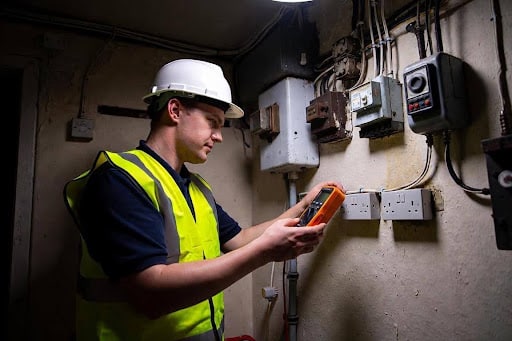
An electrical safety check involves a combination of visual inspection and electrical testing. The electrician assesses accessible parts of the installation and performs tests on circuits to establish whether protective measures are functioning correctly and whether defects or deterioration could present a danger.
The process can include checking:
- The consumer unit or fuse box
- Fixed wiring and electrical circuits
- Socket outlets and switches
- Light fittings and associated circuits
- Earthing and bonding arrangements
- Protective devices
- Permanently connected electrical equipment
- Signs of damage, overheating or deterioration
- The suitability of the installation for continued use
Government guidance specifically states that an inspection should identify overloaded electrical installations, potential electric shock risks and fire hazards, defective electrical work, and deficiencies in earthing or bonding.
For landlords, the installation covered by the regulations can also include permanently connected equipment such as showers and extractor fans, together with circuits supplying specialist equipment such as solar PV systems and battery storage.
Visual inspection
A visual inspection can reveal problems that are apparent before specialist equipment is used. The electrician may look for cracked accessories, damaged socket outlets, signs of overheating, deterioration, inappropriate alterations or other visible evidence that further investigation is needed.
The condition of the consumer unit is also relevant. An older fuse box does not automatically mean an installation is unsafe, but its condition, protective devices and compatibility with the rest of the installation need to be assessed.
Electrical testing
Visual checks alone cannot establish the condition of every part of an electrical system. Electrical testing allows the inspector to assess characteristics of circuits and protective measures that cannot be confirmed simply by looking at them.
Depending on the installation and scope of inspection, testing can include continuity, insulation resistance and polarity testing, alongside tests associated with earthing and protective devices.
These checks help the electrician determine whether the electrical installation is safe for continued use or whether defects require attention.
What Does an EICR Check?
An EICR checks the condition of an existing electrical installation and identifies defects, deterioration or safety issues that require attention. It assesses whether the installation provides appropriate protection against electrical hazards and records observations using recognised classification codes.
The electrician is therefore looking beyond whether the lights switch on or the socket outlets appear to work.
A circuit can remain operational while still containing a defect. Likewise, wear and tear can develop gradually without producing an obvious fault for the property owner or tenant.
An installation condition report EICR helps uncover these potential problems before they are ignored simply because the electrics appear to be functioning normally.
For property owners managing older London buildings, periodic inspection can be particularly useful because an installation may have been altered or extended at different points in the property’s history.
What Do the Codes on an Electrical Safety Report Mean?
An EICR uses classification codes to communicate the seriousness of observations. C1 means danger is present, C2 identifies something potentially dangerous, FI means further investigation is required without delay, and C3 means improvement is recommended.
Understanding these fault codes is important because they determine what happens next.
C1 – Danger present
A C1 observation means there is a risk of injury and immediate action is necessary. The electrical inspector may make a C1 hazard safe before leaving the property.
C2 – Potentially dangerous
A C2 observation identifies a defect that is potentially dangerous. For landlords covered by the regulations, remedial action is required.
FI – Further investigation required
An FI code means the inspector has identified something requiring further investigation without delay. Additional testing or investigation may be needed before the condition of that part of the installation can be properly determined.
C3 – Improvement recommended
A C3 observation means an improvement is recommended but does not, by itself, make the EICR unsatisfactory.
Government guidance confirms that C1 and C2 observations require remedial work and that an FI requires further investigative work. A report containing only C3 recommendations can still be satisfactory.
Are Electrical Safety Checks a Legal Requirement for London Landlords?
Landlords covered by England’s electrical safety regulations must ensure their electrical installations are inspected and tested by a qualified person at least every five years, or sooner where the previous report specifies a shorter period.
The requirements apply in London because London is subject to the regulations covering England. Government guidance also requires applicable landlords to ensure the electrical safety standards in BS 7671, the 18th Edition of the Wiring Regulations, are met.
Following the inspection, landlords must obtain the report and provide it to relevant tenants within the required timescales. An existing tenant should receive a copy within 28 days of the inspection, while a new tenant must receive the relevant report before occupying the property.
The regulations were extended to the social rented sector during 2025 and 2026. Social landlords also have additional requirements concerning electrical equipment that they provide under a tenancy.
Owners and managers of houses in multiple occupation may have additional property and fire-safety responsibilities, so the requirements applicable to the individual building should always be checked.
Do You Need a New EICR Every Time a Tenant Changes?
A new EICR is not automatically required every time a property is re-let if a valid inspection was completed less than five years ago, the report does not require further investigative or remedial work and it has not specified an earlier next inspection.
The new tenant should instead receive a copy of the valid report before occupying the property.
Government guidance nevertheless recommends carrying out at least a visual inspection before a new tenancy begins. This helps establish whether damage or deterioration has occurred since the previous EICR.
If concerns are found, arranging another electrical safety check before the normal inspection date may be appropriate.
What Happens If an EICR Finds Electrical Problems?
If an EICR identifies unsafe defects, the next step is to investigate or complete the necessary remedial work. The required response depends on the classification given by the electrical inspector and the nature of the problem.
A defect does not automatically mean the property needs a full rewire.
Further work could involve a targeted repair, replacement of damaged electrical equipment, alterations to circuits, improvements to protective measures or an upgrade to part of the installation. More extensive work may be necessary where wiring or other components are deteriorated or unsuitable.
For landlords subject to the regulations, C1 and C2 defects and FI observations require action. Current government guidance states that required remedial or further investigative work must generally be completed within 28 days, or within a shorter period where the report specifies one.
The landlord should also obtain written confirmation that the required work or investigation has been completed.
How Often Should an Electrical Installation Be Inspected?
For rented homes covered by the current regulations in England, electrical installations must be inspected and tested at least every five years. However, the person carrying out the inspection can specify that the next inspection should take place sooner.
The appropriate interval can depend on the condition of the installation and how the property is used.
Property owners should not treat the next EICR date as a reason to ignore problems in the meantime. Repeated tripping, damaged sockets, signs of overheating, burning smells or electric shocks can indicate a fault and warrant professional attention.
Regular property maintenance also provides opportunities to spot visible deterioration between formal inspections.
How Much Does an EICR Cost in London?
EICR cost in London varies according to factors such as property size and the scope and complexity of the electrical installation. PEBS currently publishes guide prices ranging from £195 for a studio to £320 for a five-bedroom property.
At the time of writing, PEBS lists the following guide prices:
| Property | PEBS guide EICR price |
| Studio | £195 |
| 1 bedroom | £220 |
| 2 bedrooms | £240 |
| 3 bedrooms | £260 |
| 4 bedrooms | £280 |
| 5 bedrooms | £320 |
PEBS states that its published rates are guides and are plus VAT, parking and materials. Larger repairs and upgrade works are quoted separately.
The cost of an EICR should therefore be distinguished from the cost of remedial work. Inspection and testing establish the condition of the installation; repairs required afterwards depend on what the report finds.
Who Should Carry Out an Electrical Safety Check?
An EICR should be completed by someone who is qualified and competent to carry out electrical inspection and testing. For landlords, choosing the right electrical inspector is essential because the report may be used to demonstrate compliance with legal electrical safety responsibilities.
Property owners should check relevant qualifications, competence and insurance rather than choosing solely on the lowest quotation.
PEBS provides electrical services across London, including electrical testing and certification, fault finding and remedial work. The company’s website states that its electricians are qualified and insured and displays NICEIC accreditation.
This means property owners can arrange the initial inspection and, where necessary, discuss the further work identified by the condition report with an electrical services provider.
Electrical Safety Checks for London Property Owners
An electrical safety check provides property owners with a structured assessment of their property’s fixed electrics. Through visual inspection and electrical testing, a qualified electrician can identify potential danger, deterioration and defects that may not be obvious during everyday use.
For London landlords, the EICR is also an important part of meeting electrical safety responsibilities. Keeping the previous EICR available, acting on required remedial work and scheduling the next inspection at the correct time creates a clearer compliance record for each property.
PEBS provides electrical services in London for homeowners, landlords, property managers and commercial clients, including testing and certification, fault finding and remedial electrical works.
If you need an electrical safety check in London, contact PEBS to discuss your property and arrange an appropriate inspection.
Disclaimer
This article provides general information about electrical safety and landlord responsibilities in England and is not electrical or legal advice for a specific property. Requirements can vary according to property type, tenure and circumstances. Property owners and landlords should refer to current government guidance and obtain advice from a suitably qualified electrical professional where necessary.